

insights The Housing Problem
Beyond our local community in the Bay Area, the housing crisis is apparent throughout the nation. For many across the United States, rising costs have made home ownership and even permanent home rental seemingly unreachable.
This case-study explores the current housing crisis, what infill and missing middle solutions we have at our disposal, and proposes a reimagination and leveraging of California housing laws that can lead to a denser urban fabric and ultimately an increase in housing stock at lower build costs.
We hope to share this knowledge while leading housing partnerships that define a better future of living.


United States

California
Bay Area
Why See Arch.

As residential design professionals, we’ve experienced the housing crisis firsthand through a variety of client and community perspectives: developers are consistently met with long approval lead-times and high costs of construction, while homeowners struggle to find housing options that fit their needs while experience the ripple effect of high costs.
See Arch has participated in the jurisdictional process on both sides of the aisle, sitting in as a participating member of governmental bodies as well as representing numerous applicants. We understand the challenges inherent in our permitting systems and are informed on both legislative challenges and incentives related to housing.
We understand what essential amenities and touchpoints make a house a home and are uniquely qualified to bring these experiences together to inform alternative ways to conceive of housing.
United States
Issues of Housing
1. Rising Costs:
Home prices have risen 47% since 2020 and 115% since 2010 (1).
Nationwide, rents have risen 26% since 2020 (1).
2. Mismatch between housing costs and incomes:
In 2022, the median home price for existing single-family homes rose to 5.1 times the median household income (1).
Since 2001, median rents have risen 21%, while median renter incomes have only risen 2% (1).
3. Insufficient Housing Supply:
The national housing shortage is estimated to be at more than 1 million units. A major obstacle to the growth of housing is zoning that is exclusively for single-family homes. Changing these regulations to allow for more multifamily housing can make the building approval process much faster and more predictable, ultimately reducing construction costs (1).
Multifamily construction starts have dropped from an annualized rate of 531,000 units in 2023 to just 343,000 units in the first quarter of 2024. In comparison, the construction of single-family homes grew from 828,000 in 2023 to 1.06 million units in the first quarter of 2024 (1).
4. Growing Threat of Climate Change:
“The number of billion-dollar disasters related to climate change has grown from an annual average of 3 in the 1980s to 28 in 2023 alone. At last count, 60.5 million housing units were located in areas with at least moderate risk, according to the FEMA National Risk Index" (1).
Relevant Statistics
In 2023, nearly half of the 42.5 million renter households in the United States were cost burdened, meaning they spent over 30% of their income on rent and utilities (2).
In 2023, the median household income was $80,610. Meaning middle class households earn between $53,740 and $161,220 a year (middle class is commonly defined as households earning between two-thirds and double the median income) (3).
As of 2026, the median home price in the United States is $441,738 (4).
California
Issues of Housing
1. High Costs:
The average rent in California is around $2,800. That is 33% higher than the national average (1).
2. Mismatch between housing costs and incomes:
Over the past two decades, home values have increased by around 180%, while median household incomes have only increased by about 23% (2).
3. Insufficient Housing Supply:
The California Department of Housing and Community Development (HCD) estimates that the state needs to build around 2.5 million new homes by 2030 to meet future demand. That is around 312, 500 units per year, which based on past building efforts by the state, seems unlikely to be met. Since 2010, California has built an average of 87,000 units per year, less than one third of this goal (3).
4. Increasing Environmental Risks:
About 11 million people in 4.5 million homes currently live in the wildland-urban interface where they are more vulnerable to wildfires (2).
An additional, 2 million homes are at high or extreme risk of wildfire (2).
The main factors contributing to the high amount of homes at risk include higher temperatures due to climate change, increased brush and vegetation due to forest management practices, and a rise in lighting-induced fires (2).
Relevant Statistics
In California, 41.9% of households were cost burdened in 2022 (4).
In 2023, the median household income in California was $96, 334. Meaning middle class households earn between $64,222 and $192,668 a year (5).
Home prices in California are among the highest in the nation, the current median home price is $900, 170 (6).
Sources
(1) https://www.zillow.com/rental-manager/market-trends/ca/
(2) https://california100.org/wp-content/uploads/2023/09/
(5) https://www.census.gov/quickfacWWts/fact/table/CA/INC110223#INC110223
(6)https://www.car.org/aboutus/mediacenter/newsreleases/2025releases/may2025sales
Bay Area
Issues of Housing
1. Rising Costs:
In 2023, the typical Bay Area rent was over $3,000, up from $2,360 in 2015 (1).
For many, homeownership is unlikely: “The typical Bay Area home value has more than doubled in the last 10 years, from around $600,000 in 2013 to over $1.2 million in 2023” (1).
2. Insufficient and Unaffordable Housing Supply:
Since 2010, the Bay Area’s population growth has outpaced housing development (2).
For housing built since 2010, the majority (55%) of vacant housing units exist in buildings with at least 50 units. Despite these statistics, zoning restrictions still favor single-family homes and large multi-family apartments. Only 5% of rental units built since 2010 are in duplexes, triplexes, or fourplexes (2).
For the past 20 years, the Bay Area has failed to build the amount of housing necessary to meet demand. The area failed to produce the 700,000 housing units that would have been necessary to make the region more affordable. Such lack of housing has allowed for wealthier households to outcompete those in low and middle-income households (3).
Relevant Statistics
Research from SPUR revealed that, “since 1999, the Bay Area has seen a decrease of 300,000 households making less than $100,000 and an increase of 625,000 households making more than $100,000” (4).
In 2024, nearly half (43.7%) of the households renting in the Bay Area were cost burdened, meaning they spend over 30% of their income on rent and utilities (1).
In 2023, the median household income in San Francisco County was $126, 730. Meaning middle class households earn between $84,486 and $253,460 a year (5).
The Missing Middle
Addressing Future Housing Goals
Multi-family housing offers the most effective means toward increased housing supply. Small scale multi-family projects, often referred to as the “Missing Middle,” have shown to be an efficient way to maximize land use and value, minimize labour and build costs and thus offering a path to feasible construction of new housing inventory.
Missing Middle housing can take on a variety of forms and densities, of which lend themselves to an array of infill and greenfield development options.
The state Department of Housing and Community Development has set a target to build 441,176 new housing units to be built in the Bay Area by 2030 (1).
California has set a target to build 2.5 million homes in the next 8 years. As part of the Statewide Housing Plan, California has set three main objectives: keep Californians in their homes, produce more affordable and climate-smart housing, and act with urgency to address homelessness and housing needs (2).
Benefits of Denser Living
Small-footprint buildings with varying densities
Easily blends into a neighborhood
Encourages mix of socioeconomic households
Help meet environmental goals
High infill ability
Lower perceived density while still providing the number of households necessary for transit and neighborhood-serving local businesses
Cheaper Construction Costs
Missing Middle Housing is simply constructed, often built with wooden frames (Type V)
Can be built without expensive construction components, such as tall steel structures and below grade parking
Smaller, Well-Designed Units
Emphasis on creating small spaces that are well designed, comfortable, and functional
Work well for both for-sale and rental housing, further increasing their appeal as more people nowadays are choosing to rent over home ownership Sources: (3), (4).

Case Study
Increased density via SB-9 Lot Split

Situated in midtown Petaluma, this site consists of a potential 4-parcel lot. It is an approximate 17, 500 sq.ft. lot size, with an existing historic home on the northern corner of the lot. With adjacencies to the city’s public library, SMART train station, walkable downtown and midtown, it’s under-developed nature renders it the perfect candidate for additional density… missing middle housing.


Lot density:
ADU development incentives.
————————
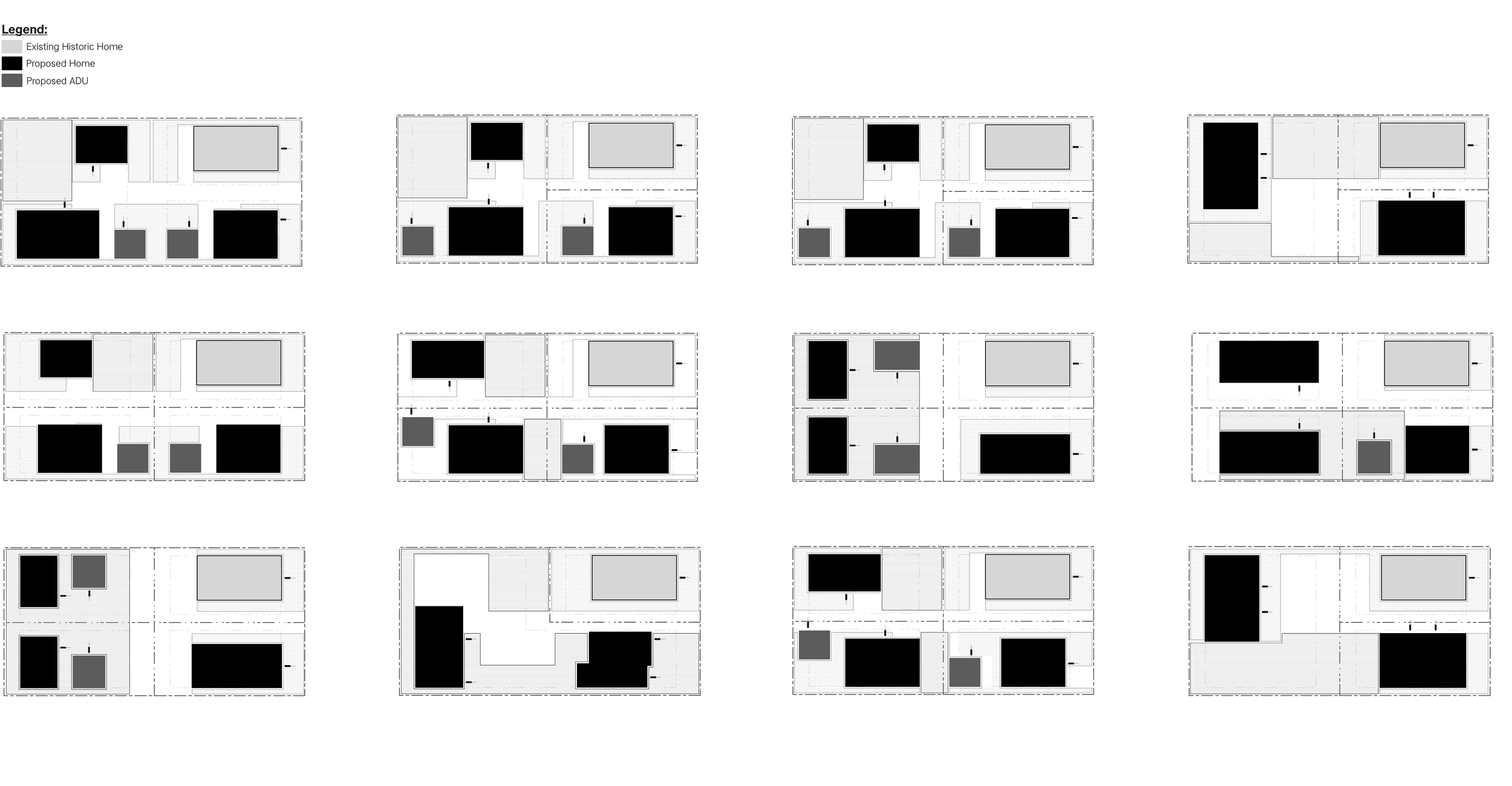
Proposal Iterations
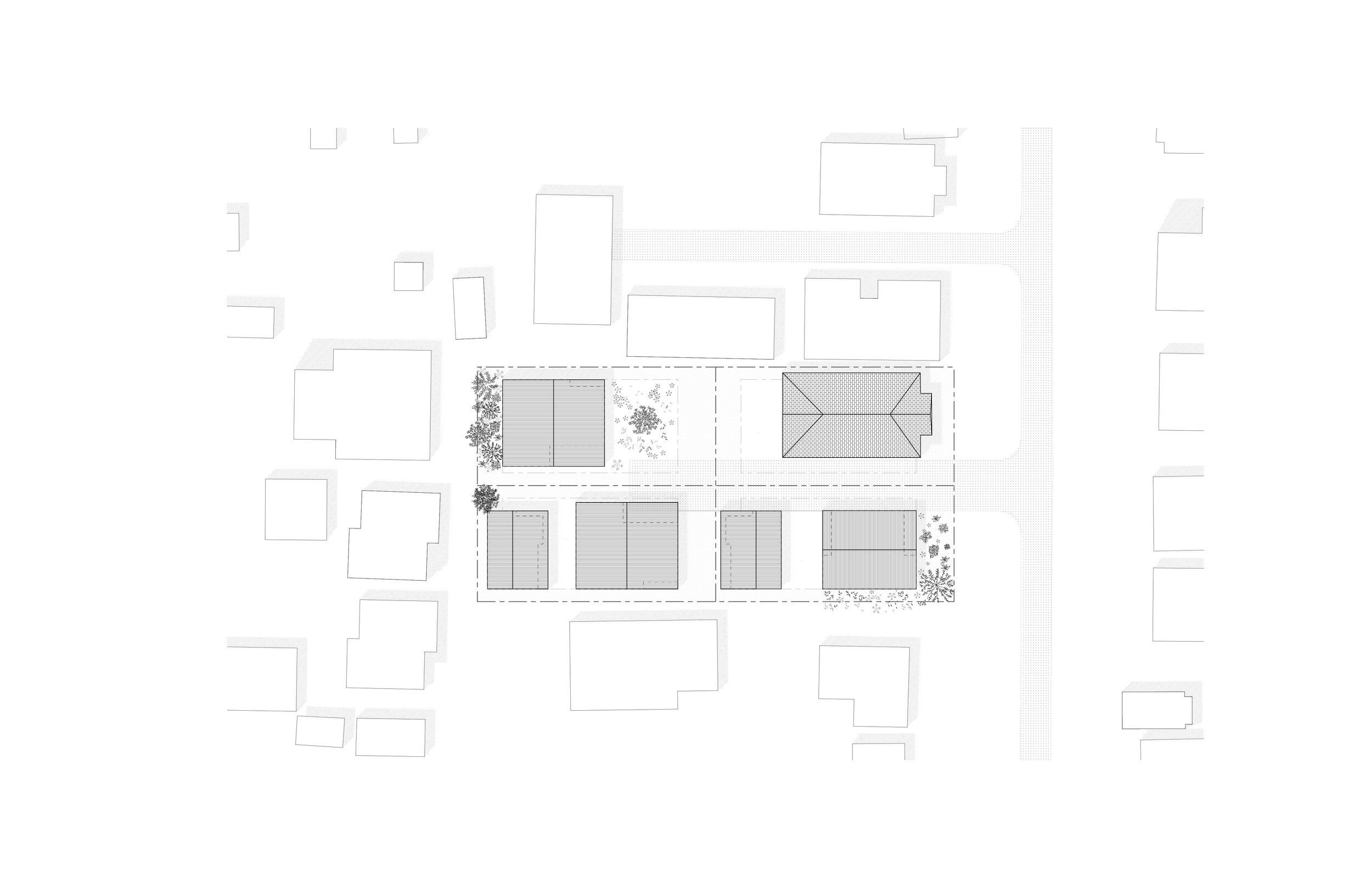
Larger Detailed Site Plan
3D Site Plan

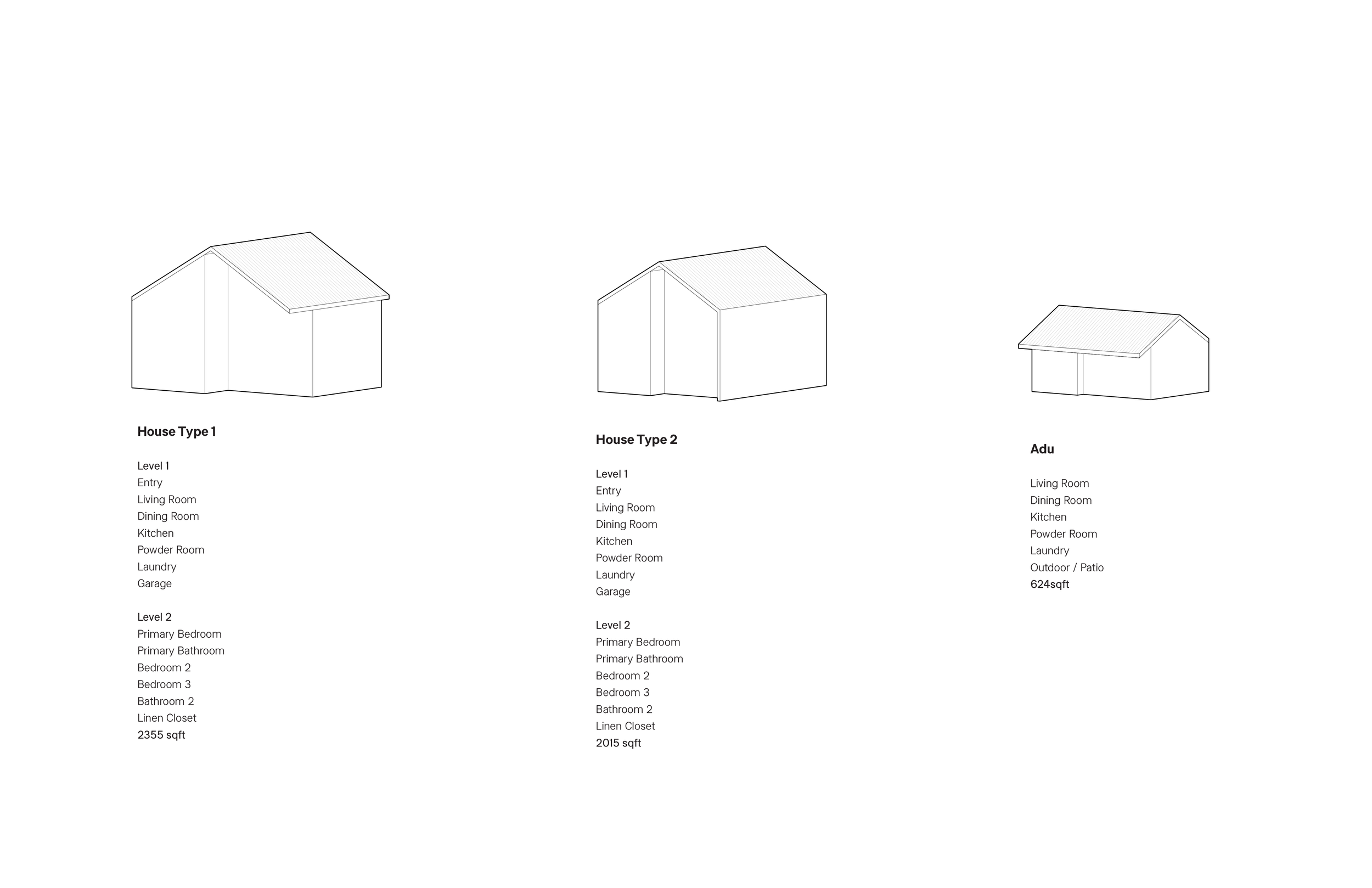
Typologies

House Type 1

House Type 2
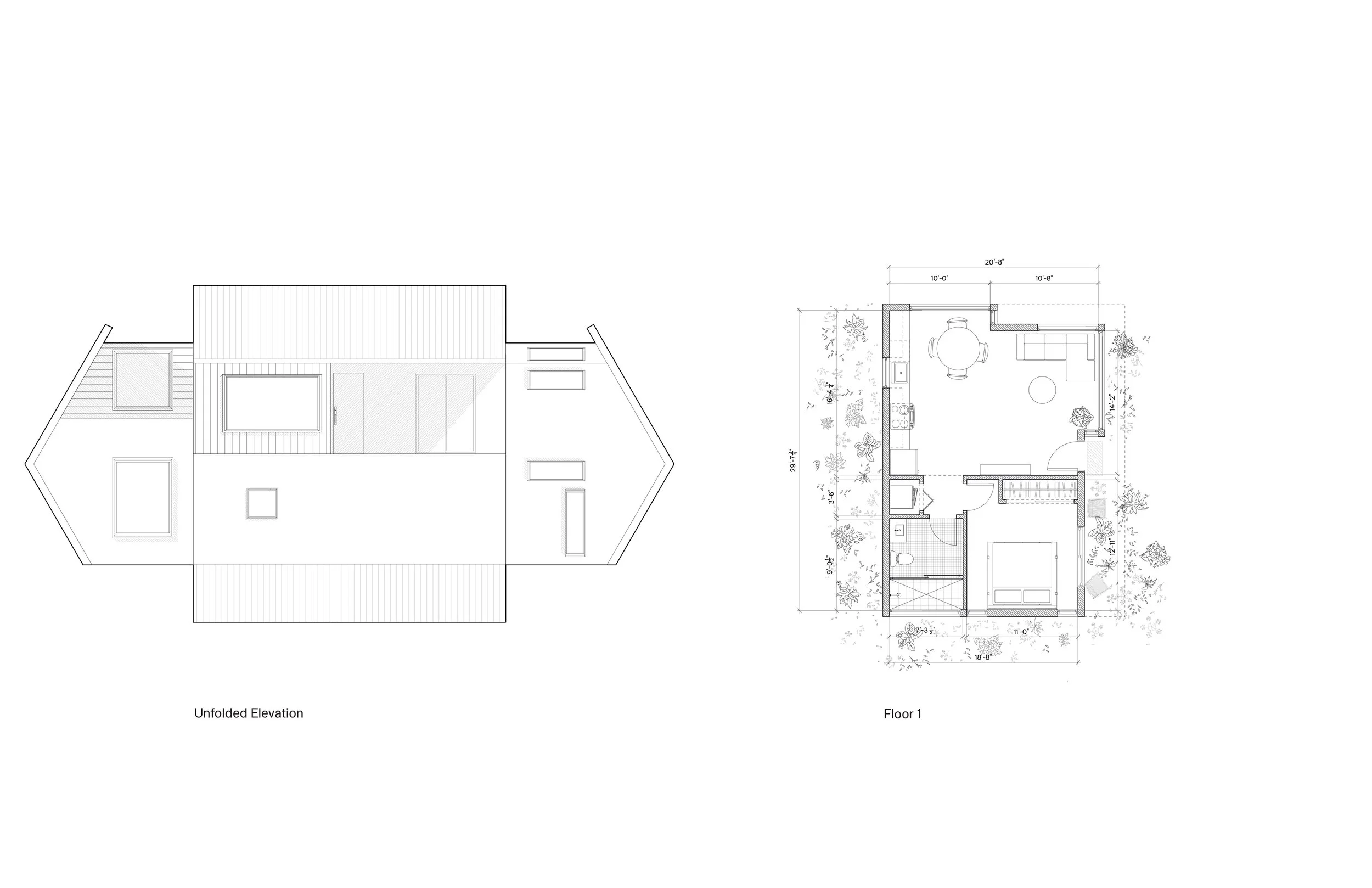
ADU

Overall Community Render
more insights